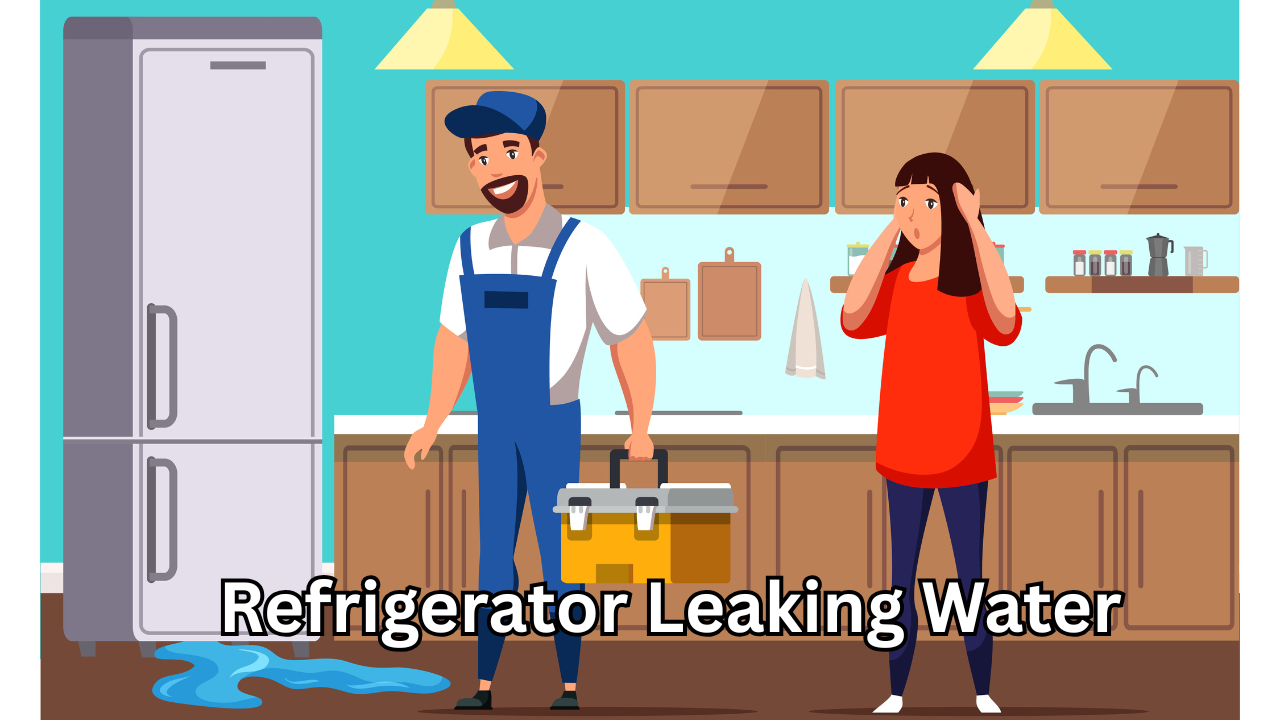
A refrigerator leaking water is one of those household problems that feels minor at first but can quickly turn into a serious inconvenience if ignored. Puddles on the kitchen floor, soggy food drawers, and potential damage to flooring are all common consequences. This guide explains why the issue happens, how to diagnose it correctly, and what steps you can take to fix it safely and effectively—without guesswork or unnecessary repairs.
Why Water Leaks from a Refrigerator in the First Place
Modern refrigerators rely on a controlled moisture cycle to keep food fresh. When any part of that system is disrupted, water can escape where it shouldn’t. Understanding the source of the leak is critical because different causes require very different solutions.
Most leaks originate from drainage issues, temperature imbalances, or worn components. Condensation that normally evaporates or drains away can back up and overflow, leading to visible water outside or inside the appliance. In many cases, the problem develops gradually, which is why homeowners often notice damage only after it becomes obvious.
Ignoring early signs allows small faults to turn into expensive repairs. Water exposure can affect electrical components, encourage mold growth, and weaken surrounding cabinetry over time.
Common Signs You Shouldn’t Ignore
Leaks don’t always present as obvious puddles. Sometimes, the warning signs are subtle and easy to miss during daily routines. Paying attention early can save time, money, and stress later.
Typical indicators include persistent moisture under crisper drawers, water pooling beneath the fridge, unexplained ice buildup in the freezer, or a musty odor near the appliance. Even intermittent leaks suggest an underlying issue that deserves attention.
If these symptoms appear repeatedly, it’s rarely a one-time spill. Instead, it usually points to a system imbalance that needs correction.
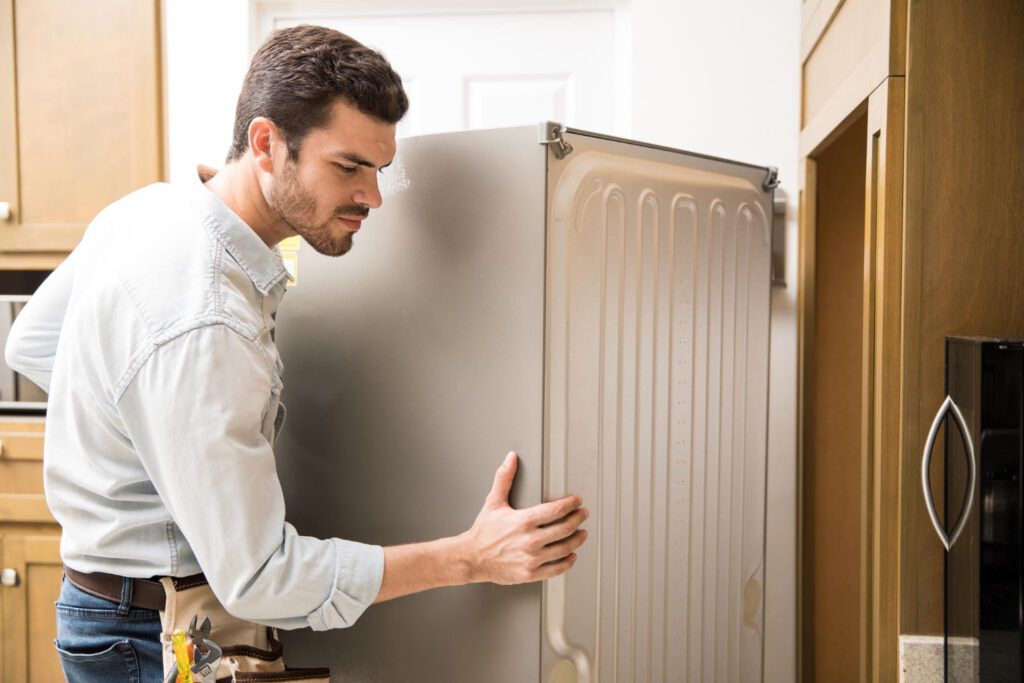
Refrigerator Leaking Water from a Clogged Defrost Drain
One of the most frequent causes of internal and external leaks is a blocked defrost drain. During normal operation, frost melts off the evaporator coils and flows through a drain tube into a pan underneath the appliance. When debris, food particles, or ice block that tube, water has nowhere to go.
As a result, it backs up and spills into the refrigerator compartment or onto the floor. This issue is especially common in frost-free models and tends to worsen in humid environments.
Clearing the drain often resolves the problem completely. A careful flush with warm water or a gentle cleaning using a flexible brush can restore proper flow. Regular maintenance helps prevent repeat blockages and keeps the defrost cycle working as intended.
Faulty or Frozen Water Supply Line
Refrigerators with ice makers or water dispensers rely on a thin supply line connected to household plumbing. When this line cracks, loosens, or freezes, leaks can occur behind or beneath the unit.
Frozen lines are particularly common in colder climates or when temperature settings are too low. Expansion from freezing can weaken fittings, allowing slow drips that may go unnoticed for weeks.
Inspecting connections and ensuring proper insulation around the line can significantly reduce risk. If the tubing shows signs of wear, replacement is usually more effective than patching, as temporary fixes often fail under pressure.
Door Seal Problems and Excess Condensation
A damaged or dirty door gasket allows warm air to enter the refrigerator. This temperature difference causes excess condensation, which can drip down shelves and collect at the bottom.
Over time, this moisture may escape the appliance and appear as a leak. Many people mistakenly assume a mechanical failure, when the real issue is simply an ineffective seal.
Cleaning the gasket regularly and checking for cracks or gaps helps maintain a tight closure. Replacing a worn seal is relatively inexpensive and can improve overall energy efficiency while preventing future moisture buildup.
Improper Leveling and Drain Pan Issues
Refrigerators are designed to sit slightly tilted backward so water flows naturally toward the drain pan. If the unit is uneven, water may spill before reaching its intended destination.
The drain pan itself can also crack or shift out of position, especially after moving the appliance. When this happens, even normal condensation can end up on the floor.
Ensuring the refrigerator is properly leveled and that the pan is intact and correctly aligned can eliminate leaks that appear mysterious at first glance.
DIY Troubleshooting vs. Professional Repair
Some causes of leaks are simple enough to address without professional help, while others require technical expertise. Knowing the difference prevents unnecessary risks.
You can safely handle basic cleaning, leveling, and visual inspections. Tasks involving electrical components, sealed systems, or internal plumbing should be left to trained technicians to avoid injury or further damage.
Attempting advanced repairs without experience may void warranties or worsen the problem. When in doubt, professional diagnosis provides clarity and peace of mind.
How to Prevent Future Leaks Long-Term
Preventive care is the most effective way to avoid recurring issues. Small habits can make a big difference in keeping your appliance dry and reliable.
Helpful preventive steps include:
- Cleaning the defrost drain periodically
- Inspecting door seals every few months
- Avoiding overloading shelves, which can block airflow
- Maintaining correct temperature settings
- Checking water lines annually for wear
These measures reduce strain on internal systems and help catch problems early, before they escalate.

Energy Efficiency and Water Leaks: The Hidden Connection
Leaks often indicate inefficiency. Excess moisture, poor seals, or blocked drains force the refrigerator to work harder to maintain temperature. This increases energy consumption and shortens the appliance’s lifespan.
Addressing leaks promptly not only protects your home but also improves performance. A well-maintained refrigerator runs quieter, cools more evenly, and uses less electricity over time.
Ignoring water issues can quietly raise utility bills while accelerating wear on critical components.
When Replacement Makes More Sense Than Repair
In older appliances, recurring leaks may signal broader deterioration. If multiple components are failing or repairs are frequent, replacement can be more cost-effective in the long run.
Newer models offer improved moisture management, better insulation, and smarter temperature control. While upfront costs are higher, long-term savings and reliability often justify the investment.
A professional assessment can help determine whether continued repair is practical or if upgrading is the wiser choice.
Final Thoughts: Fix the Problem Before It Gets Worse
A refrigerator leaking water should never be brushed off as a minor annoyance. What starts as a small drip can lead to structural damage, mold growth, and costly repairs if left unresolved. By understanding the causes, recognizing early signs, and taking timely action, you can protect both your appliance and your home.
Consistent maintenance, careful observation, and informed decisions are the keys to keeping your refrigerator running efficiently and leak-free for years to come.
Also Reed: Dehumidifier for Basement: A Powerful Solution to a Healthier, Drier Space


One thought on “Refrigerator Leaking Water: The Frustrating Problem You Must Fix Fast”
Comments are closed.