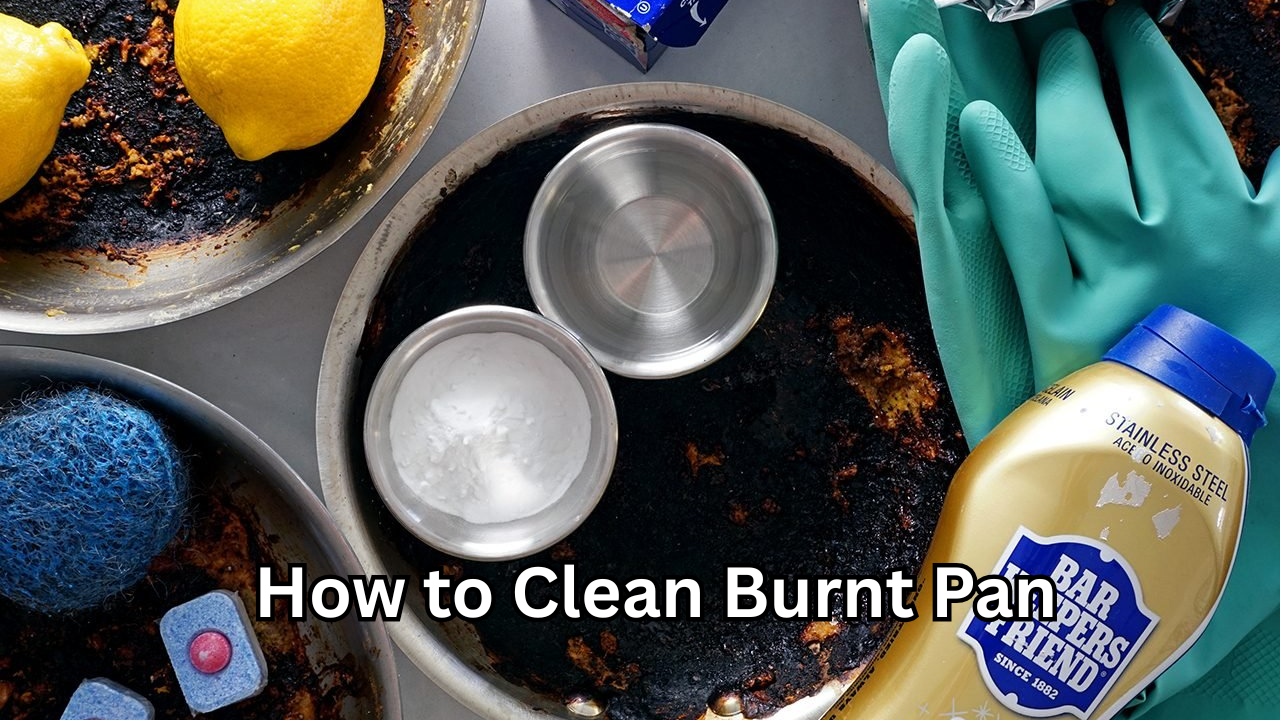
How to Clean Burnt Pan – Burnt pans are a common kitchen problem that happens to everyone at some point. Whether you accidentally left food cooking for too long or the heat was simply too high, burnt residue can stick stubbornly to the surface of your cookware. The good news is that learning how to clean burnt pan surfaces properly can help restore your cookware without damaging it.
Many people believe a burnt pan is ruined forever, but with the right techniques and cleaning methods, you can remove even the toughest burnt food and grease. In this guide, you will discover professional, easy, and effective ways to clean burnt pans using simple household ingredients. These methods are safe for most cookware types and can save you from throwing away expensive pans.
Why Burnt Residue Sticks to Pans
Before learning how to clean burnt pan surfaces, it is helpful to understand why food burns and sticks so strongly. When food cooks at high temperatures, sugars and proteins break down and stick tightly to the metal surface. If heat continues for too long, the food carbonizes and becomes very difficult to remove.
Burnt residue forms a hard layer that bonds with the pan, especially if the cookware is made from stainless steel or aluminum. Oils and fats can also burn and leave sticky stains that regular washing cannot remove. This is why special cleaning methods are often required.
Understanding this process helps you choose the best cleaning technique for your specific situation.
Immediate Steps to Take After Burning a Pan
When a pan burns, acting quickly can make cleaning much easier. If the pan has not cooled completely, adding warm water immediately can help loosen the burnt food before it hardens.
Allow the pan to cool slightly before handling it to avoid burns. Once it is safe to touch, fill the pan with warm water and a few drops of dish soap. Let it soak for at least 15 to 30 minutes. This simple step can soften the burnt layer and reduce the amount of scrubbing required later.
Never pour cold water into an extremely hot pan, as this can warp the metal and damage your cookware.
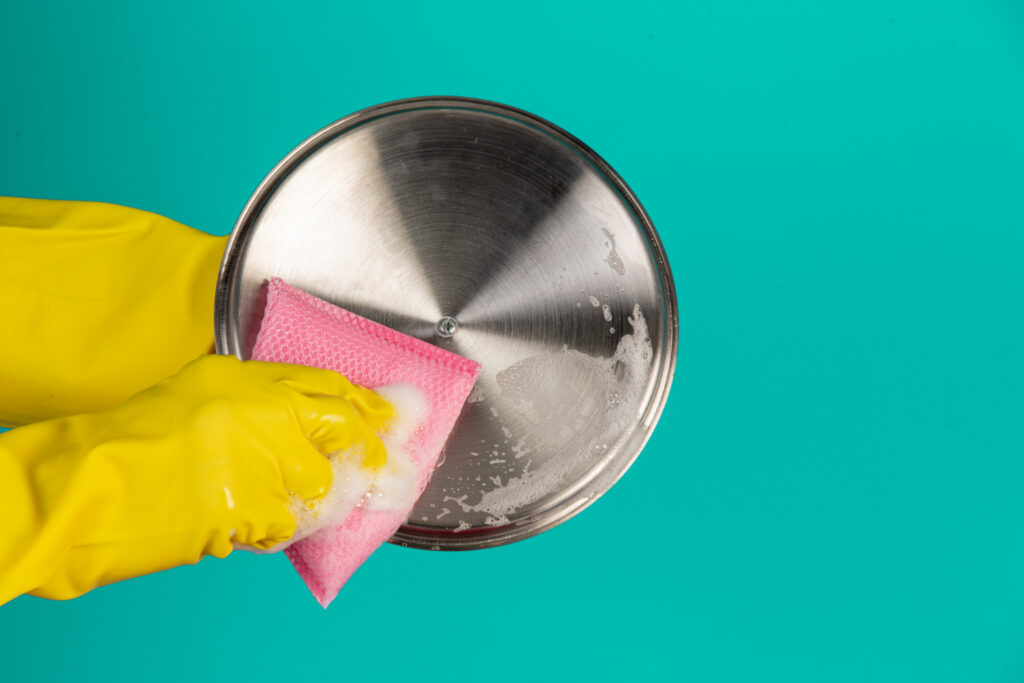
How to Clean Burnt Pan Using Baking Soda
One of the most effective and natural methods for cleaning burnt pans involves baking soda. Baking soda works as a gentle abrasive and helps break down burnt food particles.
Start by sprinkling a generous amount of baking soda across the burnt area of the pan. Add enough warm water to cover the bottom surface and place the pan on the stove. Allow the mixture to simmer for about 10 minutes.
As the baking soda solution heats up, it loosens the burnt residue. After simmering, turn off the heat and allow the pan to cool. Use a sponge or scrubber to gently remove the softened burnt layer.
This method is especially effective for stainless steel pans and works well without damaging the surface.
Cleaning a Burnt Pan with Vinegar
Vinegar is another powerful household ingredient that helps dissolve burnt food. Its natural acidity breaks down stubborn stains and residue.
Pour a layer of white vinegar into the burnt pan until the affected area is covered. Heat the pan on the stove until the vinegar begins to simmer. Once it simmers, remove the pan from heat and add a few tablespoons of baking soda.
The mixture will fizz and react, helping to lift burnt food from the surface. Allow the solution to sit for about 15 minutes before scrubbing gently with a sponge.
This technique is particularly useful for removing dark burn marks and stubborn grease buildup.
Using Salt to Remove Burnt Food
Salt can work as a natural scrubbing agent for cleaning burnt pans. Its coarse texture helps remove stuck food without using harsh chemicals.
After soaking the pan in warm water, sprinkle a thick layer of salt across the burnt area. Use a damp sponge or cloth to scrub the surface in circular motions. The salt helps break down the burnt residue while protecting the pan from deep scratches.
This method works best for lighter burn marks and small food stains.
Cleaning Burnt Nonstick Pans Safely
Nonstick pans require extra care because aggressive scrubbing or harsh chemicals can damage their coating. When learning how to clean burnt pan surfaces that are nonstick, gentle cleaning is essential.
Fill the pan with warm water and add a small amount of dish soap and baking soda. Allow it to simmer on low heat for several minutes. The heat helps loosen burnt food without damaging the nonstick surface.
After cooling, use a soft sponge to wipe away the residue. Avoid metal scrubbers or abrasive pads, as they can scratch the coating.
Maintaining the nonstick layer ensures your pan lasts longer and continues to perform well.
How to Clean Burnt Stainless Steel Pans
Stainless steel pans are durable but can develop stubborn burn marks. Fortunately, they respond well to deeper cleaning techniques.
Start by adding water and baking soda to the pan and bringing the mixture to a gentle boil. Use a wooden spoon or spatula to scrape the bottom lightly as it heats. This helps lift burnt particles from the surface.
After boiling for several minutes, remove the pan from heat and let it cool. Scrub gently with a sponge to remove remaining residue.
If stains remain, a paste made from baking soda and water can be applied directly to the burnt areas for extra cleaning power.
Lemon Method for Burnt Pan Cleaning
Lemons provide a natural cleaning solution thanks to their acidity and fresh scent. This method works well for light to moderate burn stains.
Slice two or three lemons and place them inside the burnt pan. Fill the pan with enough water to cover the burnt areas and bring it to a boil on the stove.
As the lemon water simmers, the acid helps break down burnt food particles. After boiling for about 10 minutes, remove the pan from heat and discard the liquid. Scrub lightly with a sponge to reveal a cleaner surface.
This method also leaves the pan smelling fresh and removes grease effectively.
Hydrogen Peroxide and Baking Soda Method
For extremely stubborn burnt residue, a mixture of hydrogen peroxide and baking soda can provide deeper cleaning.
Sprinkle baking soda over the burnt surface and add a small amount of hydrogen peroxide until a paste forms. Spread the mixture across the affected areas and allow it to sit for about 30 minutes.
The chemical reaction helps loosen carbonized food particles. After the waiting period, scrub gently with a sponge and rinse thoroughly with warm water.
This technique works particularly well for heavily burned pans that regular cleaning methods cannot restore.

Preventing Pans from Burning in the Future
Learning how to clean burnt pan surfaces is helpful, but preventing burning in the first place is even better. Simple cooking habits can significantly reduce the risk of burnt cookware.
Always monitor food while cooking, especially when using high heat. Stir frequently to prevent food from sticking to the bottom of the pan. Using the correct amount of oil or butter also helps create a protective layer that prevents burning.
Choosing the right heat level is important as well. Many foods cook perfectly at medium heat rather than high heat, reducing the chance of burnt residue.
Quality cookware also distributes heat more evenly, minimizing hot spots that cause burning.
When a Burnt Pan May Be Beyond Repair
While most burnt pans can be restored, there are rare cases where the damage may be too severe. If the bottom of the pan has warped significantly or the nonstick coating has peeled away, it may be safer to replace the cookware.
Deep scratches or chemical damage can also affect cooking performance and food safety. In such situations, replacing the pan is the better option.
However, most burnt pans simply need the right cleaning method and a little patience to look and function like new again.
Final Thoughts on How to Clean Burnt Pan
Burnt pans can be frustrating, but they are rarely a permanent problem. With the right techniques and common household ingredients such as baking soda, vinegar, salt, and lemon, you can effectively restore your cookware.
Understanding how to clean burnt pan surfaces safely not only saves money but also extends the life of your kitchen equipment. Whether you are dealing with stainless steel, nonstick, or aluminum cookware, there is always a reliable method to remove burnt food and stains.
By combining proper cleaning methods with careful cooking habits, you can keep your pans in excellent condition for years. The next time a cooking accident leaves a stubborn burn mark behind, you will know exactly how to fix it and bring your pan back to life.
Also Read: Cost of Termite Treatment: Complete Homeowner Guide to Pricing, Factors, and Long-Term Protection

One thought on “How to Clean Burnt Pan: Complete Guide to Restore Your Cookware”
Comments are closed.