Introduction
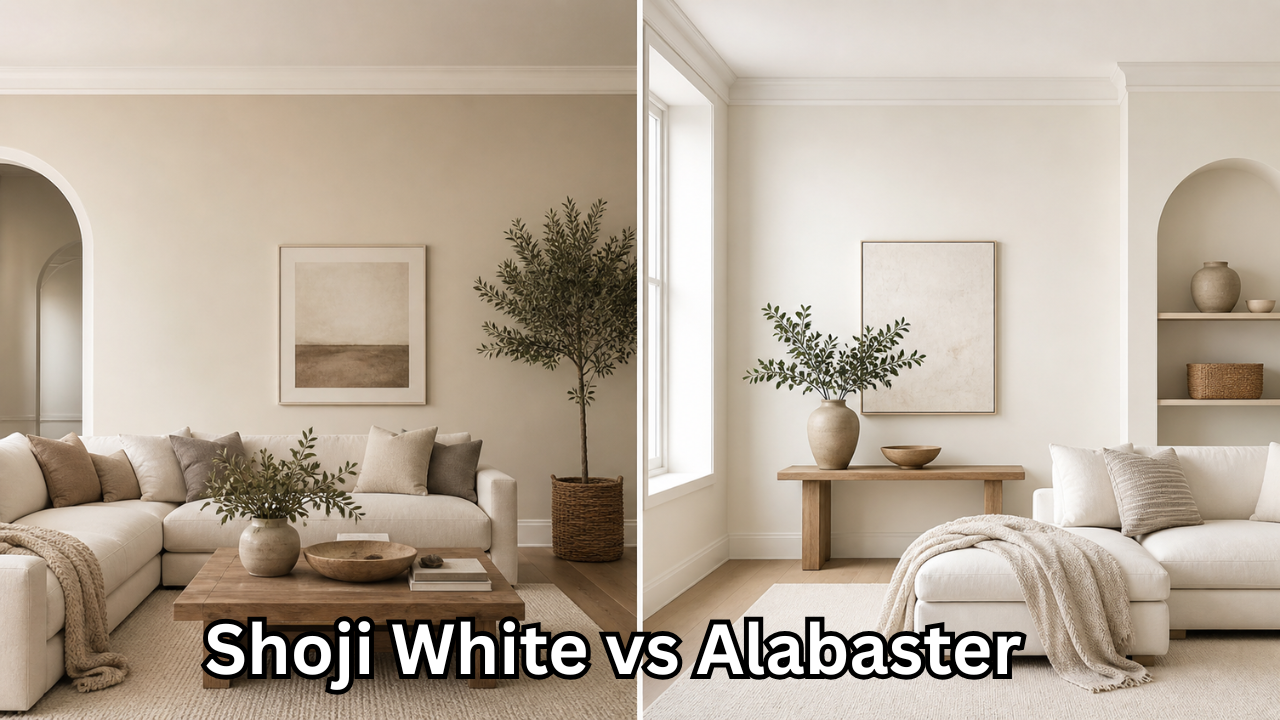
Shoji White vs Alabaster – Choosing the perfect white paint color might seem simple, but it can quickly become overwhelming once you realize how many shades exist. Two of the most popular choices among homeowners and interior designers are Shoji White and Alabaster. While both are soft, warm whites, they have subtle differences that can dramatically impact the look and feel of your space.
If you’re trying to decide between Shoji White vs Alabaster, this detailed guide will help you understand their undertones, lighting behavior, best uses, and how to choose the right one for your home. By the end, you’ll have a clear idea of which shade suits your style and space.
Understanding Shoji White
Shoji White is a warm off-white paint color that leans slightly toward greige. It is not a pure white, and that’s exactly what makes it so versatile. It carries soft undertones of beige and gray, which help create a cozy and inviting atmosphere.
One of the key features of Shoji White is its adaptability. In bright lighting, it can appear closer to a creamy white, while in dim lighting, it leans more toward a muted beige. This dynamic nature makes it an excellent choice for spaces where lighting changes throughout the day.
Shoji White works particularly well in modern, farmhouse, and transitional interiors. It pairs beautifully with natural materials like wood, stone, and linen, making it a popular choice for homeowners who want a warm yet neutral backdrop.
Understanding Alabaster
Alabaster is another warm white paint color, but it is softer and more traditional compared to Shoji White. It has subtle creamy undertones without being overly yellow, which gives it a clean and timeless look.
Unlike Shoji White, Alabaster tends to stay more consistent in different lighting conditions. It reflects light beautifully, making rooms feel brighter and more open without appearing stark or cold.
Alabaster is often used in classic, minimalist, and contemporary interiors. It’s a favorite for walls, trim, and even ceilings because of its soft, neutral appearance that complements almost any design style.
Shoji White vs Alabaster: Key Differences
When comparing Shoji White vs Alabaster, the differences may seem small at first glance, but they can have a big impact on your space.
Shoji White has more depth and complexity due to its greige undertones. This makes it slightly darker and more muted. It creates a cozy and grounded feel, especially in rooms with natural textures.
Alabaster, on the other hand, is lighter and cleaner. It reflects more light and gives a brighter, airier appearance. It doesn’t have the same gray undertones, which makes it feel softer and more traditional.
Another major difference is how they react to lighting. Shoji White can shift noticeably depending on natural and artificial light, while Alabaster remains more stable and predictable.

Undertones and How They Affect Your Space
Undertones are one of the most important factors when choosing paint, and they play a major role in the Shoji White vs Alabaster comparison.
Shoji White has a mix of beige and gray undertones. These undertones help tone down the brightness, making it feel warmer and slightly earthy. However, in certain lighting conditions, the gray can become more noticeable, giving it a muted appearance.
Alabaster has soft cream undertones. It avoids the harshness of pure white while still maintaining a light and fresh look. Its undertones are subtle enough that they don’t overpower the space.
If your room has a lot of cool elements like gray flooring or metal finishes, Shoji White can help balance things out. If your space already leans warm, Alabaster will enhance that warmth without becoming too heavy.
Best Rooms for Shoji White
Shoji White is an excellent choice for areas where you want a cozy and inviting atmosphere. Living rooms, bedrooms, and dining areas benefit greatly from its warm and grounded tone.
It also works well in open-concept homes where you want a neutral color that adds depth without overwhelming the space. Because of its greige undertones, it pairs beautifully with darker accents like black fixtures or deep wood tones.
In spaces with lots of natural light, Shoji White can create a soft, calming environment that feels both modern and comfortable.
Best Rooms for Alabaster
Alabaster is ideal for spaces where brightness and openness are key. Kitchens, bathrooms, and hallways benefit from its light-reflecting qualities.
It’s also a great choice for smaller rooms because it helps make them feel larger and more airy. Alabaster is commonly used on trim and cabinets as well, thanks to its clean and versatile appearance.
If you’re aiming for a timeless and elegant look, Alabaster is a safe and reliable option that works in almost any room.
Lighting Considerations
Lighting plays a huge role in how paint colors appear, and this is especially true when comparing Shoji White vs Alabaster.
Shoji White can look warmer in rooms with warm lighting and slightly cooler in spaces with natural daylight. This variability can be an advantage if you want a color that changes throughout the day, but it can also be a challenge if you prefer consistency.
Alabaster is more predictable. It maintains its soft white appearance in most lighting conditions, making it easier to work with if you’re unsure about your lighting setup.
Before making a final decision, it’s always a good idea to test both colors on your walls and observe them at different times of the day.
Pairing with Other Colors
Both Shoji White and Alabaster are versatile, but they pair differently with other colors.
Shoji White works well with earthy tones, muted greens, warm grays, and natural wood finishes. It complements rustic and organic design elements beautifully.
Alabaster pairs well with almost everything, including soft pastels, bold accents, and neutral palettes. Its flexibility makes it a favorite for homeowners who like to change decor frequently.
If you want a color that adds subtle depth and character, Shoji White is a great choice. If you prefer a clean canvas that works with any palette, Alabaster is the better option.
Which One Should You Choose?
Choosing between Shoji White vs Alabaster ultimately depends on your personal style, lighting conditions, and the mood you want to create.
If you prefer a warmer, cozier, and slightly more complex color, Shoji White is the way to go. It adds depth and works well in spaces where comfort is a priority.
If you want a brighter, cleaner, and more timeless look, Alabaster is the better choice. It’s versatile, easy to use, and perfect for creating an open and airy feel.
There’s no wrong choice here—both colors are beautiful and highly popular for a reason.
Final Thoughts
The debate between Shoji White vs Alabaster comes down to subtle differences that can have a big impact on your home’s overall design. Shoji White offers warmth and depth with its greige undertones, while Alabaster provides a soft, clean, and timeless look.
Before making your final decision, consider your room’s lighting, existing decor, and the atmosphere you want to create. Testing samples on your walls is always the best way to see how each color performs in your space.
By choosing the right shade, you can transform your home into a space that feels perfectly balanced, stylish, and welcoming.
Also Read: Breakfast Nook Table: The Ultimate Guide to Stylish and Functional Dining Spaces


One thought on “Shoji White vs Alabaster: Which Paint Color Is Best for Your Home?”
Comments are closed.